
Serving the USA Call (888) 489-1383
Patriot Roof Repair

Roofing · the USA

Roof Leak Repair in the USA

Patriot Roof Repair handles roofing work across the USA.

Roof Leak Repair in the USA
Coverage
the USA

Detailed Leak Mapping

Technicians trace water paths from entry points through layers of roofing material to locate every active leak.

Material Matching

Repairs use the same membrane type already installed so the patch bonds correctly and ages at the same rate.

Full Documentation

Each visit ends with a written report that lists findings, work completed, and any sections that should be watched.

Services

What we handle in the USA

01 / 08

Roof Repair

The process starts with a written assessment that identifies every component needing attention. Materials are chosen to match the existing roof system, and the same crew that does the inspection returns to finish the repair. A final review confirms fasteners are seated and flashings are sealed before the site is left, supporting ongoing roof maintenance.

Get a quote

02 / 08

Roof Replacement

Each project begins with a written assessment that lists the existing conditions, the proposed materials, and the sequence of steps. Homeowners receive a copy so they can review details and ask questions before work begins.

Get a quote
03 / 08

Roof Installation

We focus on clear communication about the existing roof condition and the materials chosen. The crew works methodically so each layer is installed correctly before the next begins. Homeowners receive a written scope before any work starts.

Get a quote
04 / 08

Roof Inspection

Patriot Roof Repair follows a set sequence for each inspection so findings remain comparable over time. Notes focus on observable conditions rather than predictions.

Get a quote
05 / 08

Storm Damage Roof Repair

The process starts with a full-surface inspection that records every affected area. Repairs follow manufacturer guidelines for the specific roofing system in place. Final review confirms that replaced sections integrate with the remaining roof.

Get a quote
08 / 08

Flat Roof Repair

Patriot Roof Repair matches repair methods to the existing roof type rather than using a single product for every job. Crews document each section before and after so property records stay accurate.

Get a quote

Tracing the Path of Water

A leak rarely appears directly below the damage. Water travels along underlayment, rafters, or insulation before it shows on a ceiling. The first step is a systematic roof inspection that starts at the roof surface and moves downward. Crews check flashing around chimneys and vents, examine sealant at penetrations, and look for lifted shingles or membrane splits. Interior stains get mapped against exterior features to narrow the search. Once the entry point is confirmed, the affected area is isolated so the repair can be limited to the damaged section rather than the entire slope.

Common Sources Found on Site

Most leaks begin at transitions where different materials meet. Valleys collect debris that holds moisture against seams. Skylight curbs often lose their flashing integrity after several freeze-thaw cycles. Nail pops from thermal movement create small openings that enlarge over time. Homeowners can sometimes spot curled edges or missing granules, yet many entry points remain hidden until a trained eye examines them from above. Recording these conditions helps prioritize which areas need attention first.

Our process

How a Repair Moves Forward

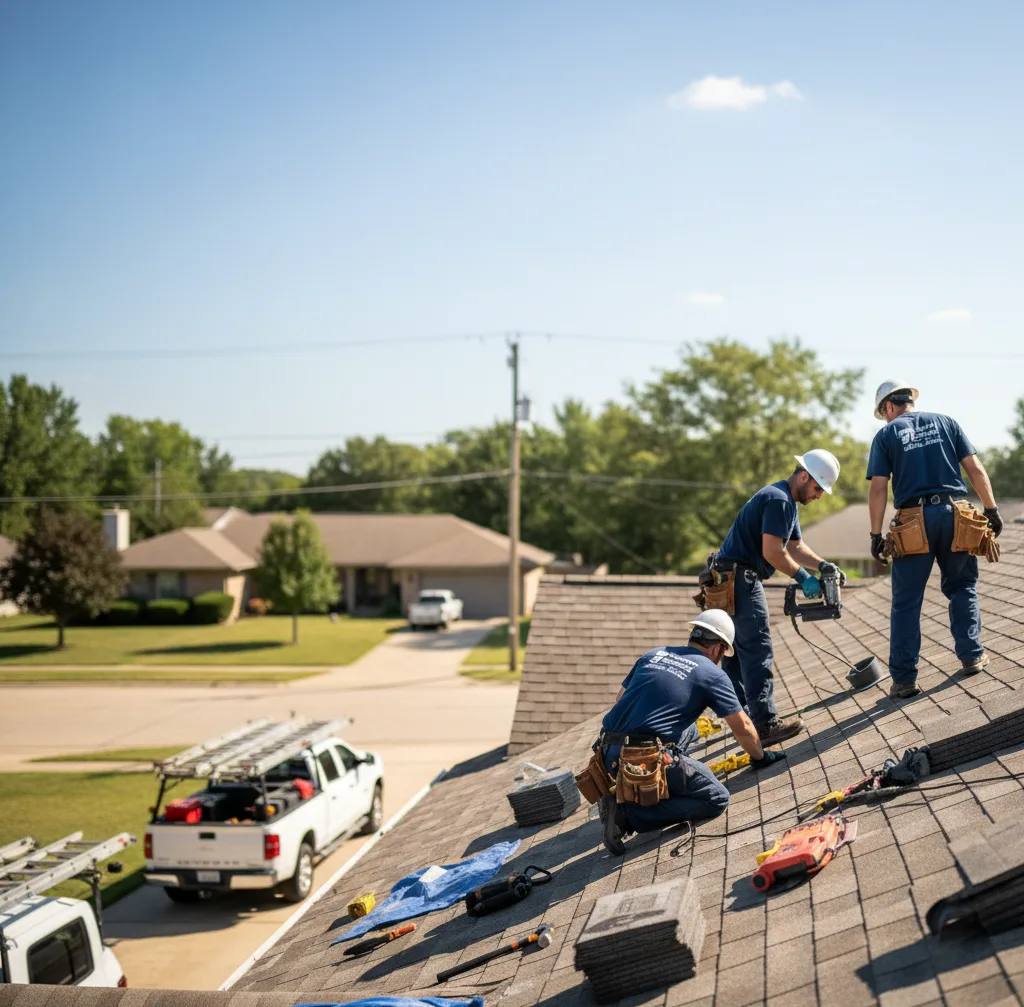
The process starts with an on-site assessment that identifies the leak source and any related damage. Once the scope is confirmed, the repair proceeds in the order required by the roof construction. A final review confirms the area is watertight and the surrounding surfaces remain undamaged.

Assessment of the roof surface and interior signs to locate the entry point.
Removal of damaged material down to sound substrate and installation of new layers.
Final check of the repair and surrounding area with a written summary of findings.

Sequence of a Typical Repair

Work begins with removal of the compromised section down to sound substrate. New underlayment is installed to restore the water-shedding plane, followed by matching shingles or membrane. Fasteners are placed according to manufacturer spacing so the repair does not become the next weak point. The surrounding area receives a final check for any secondary damage that may have been missed during the initial assessment. A moisture meter confirms the decking has dried before the new layer is applied.

Distinguishing One Job from Another

Not every leak requires the same approach. A single shingle tear on a newer roof can be fixed with a targeted patch. An older built-up roof may need the entire field stripped back several feet to reach solid material. Access also changes the scope. Steep pitches call for additional safety equipment, while low-slope sections may require different adhesives. The crew evaluates these factors on arrival so the repair matches the actual conditions rather than a standard template.

Pricing

Factors That Shape the Final Cost

The final price depends on roof pitch, extent of damage, and the type of material already in place. Figures below represent typical starting points rather than quotes for any specific address.

Roof Leak Repair — starting at $875 Flashing Replacement — starting at $425 Underlayment Patch — $650-$950 Shingle Section Repair — starting at $725 Membrane Seam Repair — starting at $550 Valley Rebuild — $1,050-$1,450 Skylight Curb Sealing — starting at $375 Vent Boot Replacement — starting at $295 Ridge Cap Restoration — $480-$780 Full Slope Assessment — starting at $225

Work on Rental and Commercial Properties

Rental buildings and small commercial structures often have different leak patterns than single-family homes. Flat sections with HVAC curbs create additional seams that must be sealed. Tenants may notice water stains before property managers do, so clear communication with both parties keeps repairs from disrupting occupancy. Documentation of the work helps owners track recurring issues across multiple units. Seasonal inspections become useful on these properties because equipment vibration and foot traffic accelerate wear on certain areas.

Signs That Warrant an Earlier Visit

A ceiling stain that grows after each rain indicates an active path. Buckling drywall or soft spots in attic insulation point to prolonged moisture exposure. These conditions do not always require emergency boarding, yet they benefit from prompt evaluation so the affected materials can be dried before mold sets in. Owners can note the date and weather conditions each time a stain appears; that record helps the technician correlate interior marks with exterior defects during the inspection.

FAQ

Common questions in the USA

Patriot Roof Repair customer support in the USA
What happens if the leak is in an area that is difficult to reach?

Access equipment is brought in when the pitch or height requires it. The repair itself follows the same sequence once the crew can work safely at the location. Homeowners receive an explanation of the equipment needs before work begins.

Can I wait until the next dry season to have the roof checked?

A small opening can allow additional water during the next rain, which may extend the damaged area. An inspection now identifies whether temporary measures are enough or whether a permanent fix is needed before further moisture enters the structure.

How do you find a leak that does not show on the ceiling?

The crew begins at the most likely entry points such as valleys, penetrations, and changes in slope. They use visual inspection and moisture readings to trace the path backward from any interior marks. When no interior signs exist, they examine the entire surface systematically until the opening is located.

Need Roof Leak Repair in the USA?

Roof Leak Repair across the USA. Call (888) 489-1383.

Call (888) 489-1383