Roofing · the USA
The process starts with a written assessment that identifies every component needing attention. Materials are chosen to match the existing roof system, and the same crew that does the inspection returns to finish the repair. A final review confirms fasteners are seated and flashings are sealed before the site is left, supporting ongoing roof maintenance.
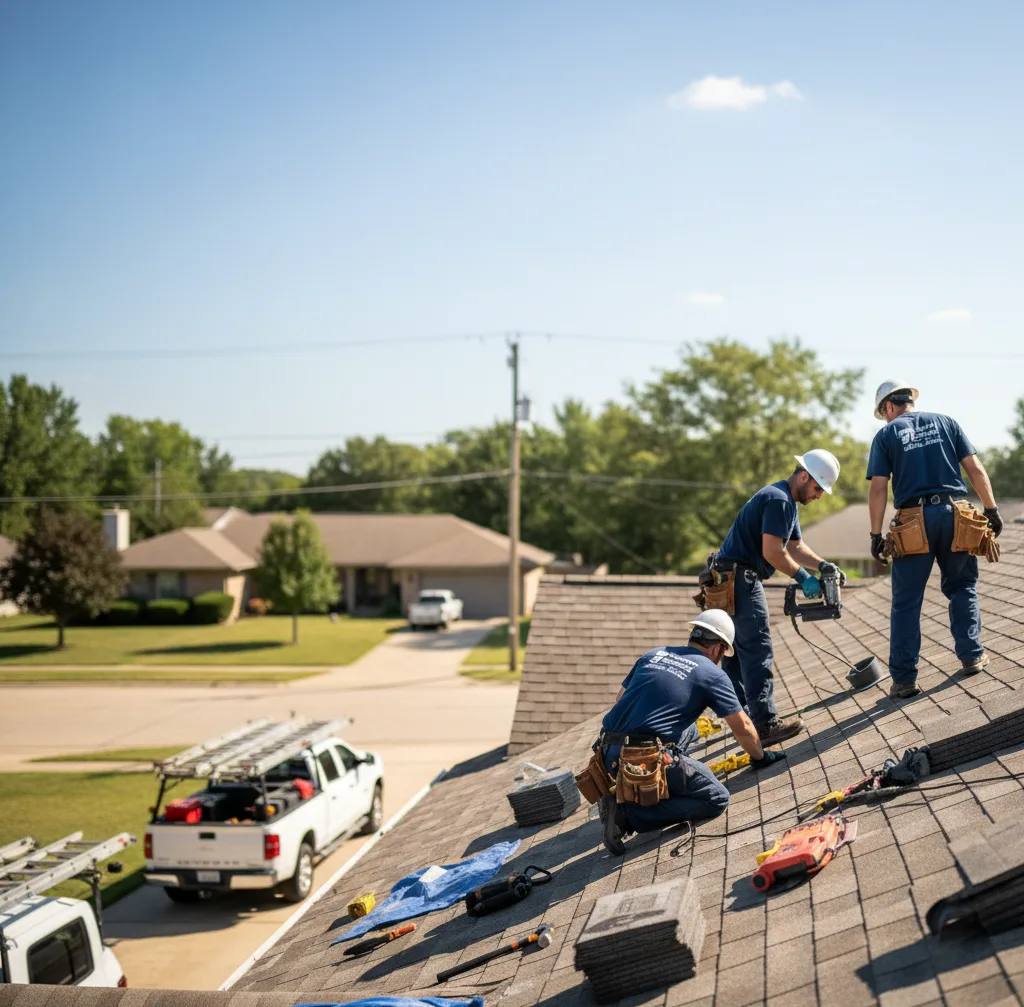
Roof leaks rarely show up right below the damaged spot because water travels along decking, rafters, or felt before it drips into living space. Technicians start a roof inspection by mapping interior stains, then move outside to check ridge caps, valley metal, step flashing around chimneys, and vent boot condition. Granule loss on asphalt shingles, curled edges, and cracked sealant around pipe penetrations are noted because each points to a different stage of weathering. Once the entry point is isolated, the crew checks whether the decking has softened, which can shift the job from a surface fix to partial roof replacement. This order cuts down on repeat visits for the same leak and limits how much material gets pulled.
Before any new material goes on, the sheathing is tested for firmness and checked for rot past the immediate leak zone. Sagging between rafters or soft spots near eaves often signal long-term moisture that a simple shingle swap won't fix. In those cases the bad panels are cut out and new plywood is set to give a solid nailing surface. Flashing gets checked for metal fatigue or bad overlap too, since reused or undersized pieces often lead to the same problem coming back. These checks happen no matter how small the original complaint seems.
FAQ

Access equipment is brought in when the pitch or height requires it. The repair itself follows the same sequence once the crew can work safely at the location. Homeowners receive an explanation of the equipment needs before work begins.
A small opening can allow additional water during the next rain, which may extend the damaged area. An inspection now identifies whether temporary measures are enough or whether a permanent fix is needed before further moisture enters the structure.
The crew begins at the most likely entry points such as valleys, penetrations, and changes in slope. They use visual inspection and moisture readings to trace the path backward from any interior marks. When no interior signs exist, they examine the entire surface systematically until the opening is located.
Roof Leak Repair across the USA. Call (888) 489-1383.
Call (888) 489-1383